Greetings are the best first sentences: short, useful and loved by grandparents. Here are ten to practise.
| English | Urdu | Say it |
|---|---|---|
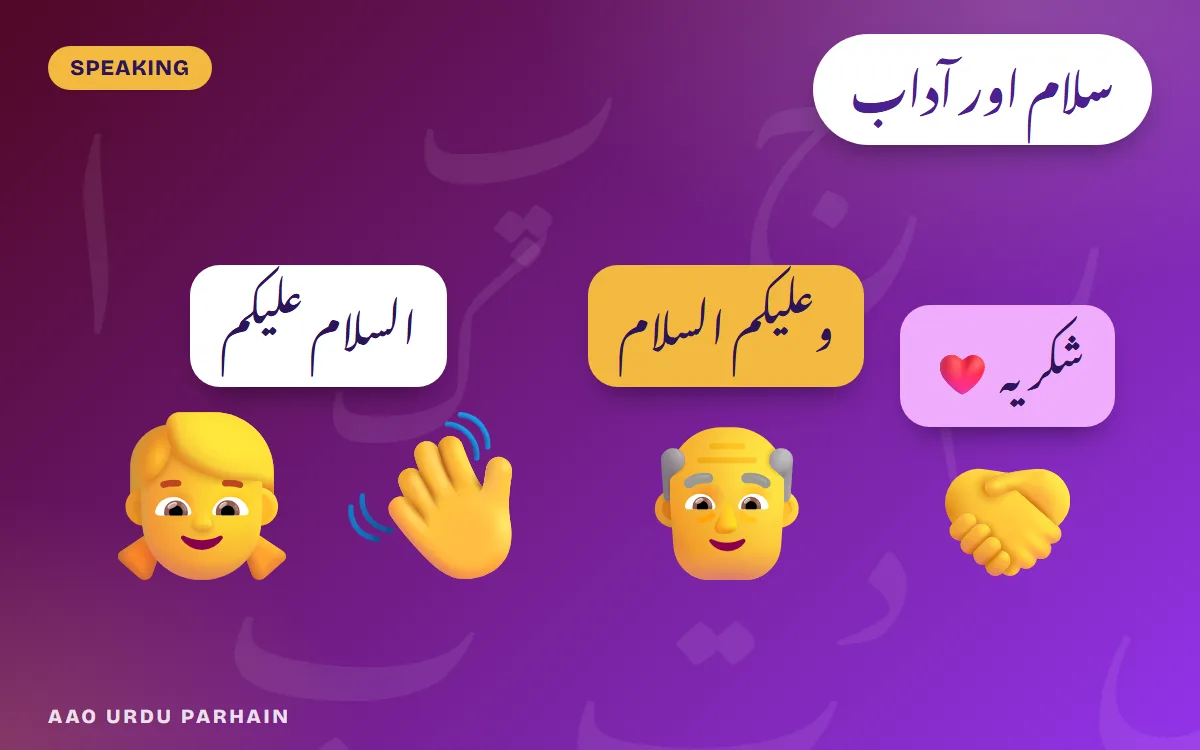
| Peace be upon you (hello) | السلام علیکم | assalaam-o-alaikum |
| And upon you, peace (reply) | وعلیکم السلام | wa-alaikum assalaam |
| How are you? (to an elder) | آپ کیسے ہیں؟ | aap kaise hain? |
| How are you? (to a friend) | تم کیسے ہو؟ | tum kaise ho? |
| I am well | میں ٹھیک ہوں | main theek hoon |
| Thank you | شکریہ | shukriya |
| Please | براہِ مہربانی | baraah-e-meherbaani |
| Sorry / excuse me | معاف کیجیے | maaf kijiye |
| Yes / No | جی ہاں / جی نہیں | ji haan / ji nahin |
| Goodbye | خدا حافظ | khuda haafiz |
Speaking politely to elders
Urdu has levels of respect built into the language. آپ (aap) is the polite "you" for elders, teachers and guests; تم (tum) is for friends and younger people. Teaching children to say aap to grandparents is a lovely, practical first step.
A five-minute practice
- Greet each other in Urdu at breakfast all week.
- Pick one phrase per day and use it five times.
- Before the next call to a grandparent, practise aap kaise hain? together.
Try it with sound: the Kids' corner has picture cards for every word here. Tap a card to hear it spoken, then play the match game.
بچوں کے لیے اردو سلام اور آداب
السلام علیکم، آپ کیسے ہیں، شکریہ، مہربانی، خدا حافظ۔ بزرگوں سے "آپ" کہہ کر بات کرنا سکھائیں۔