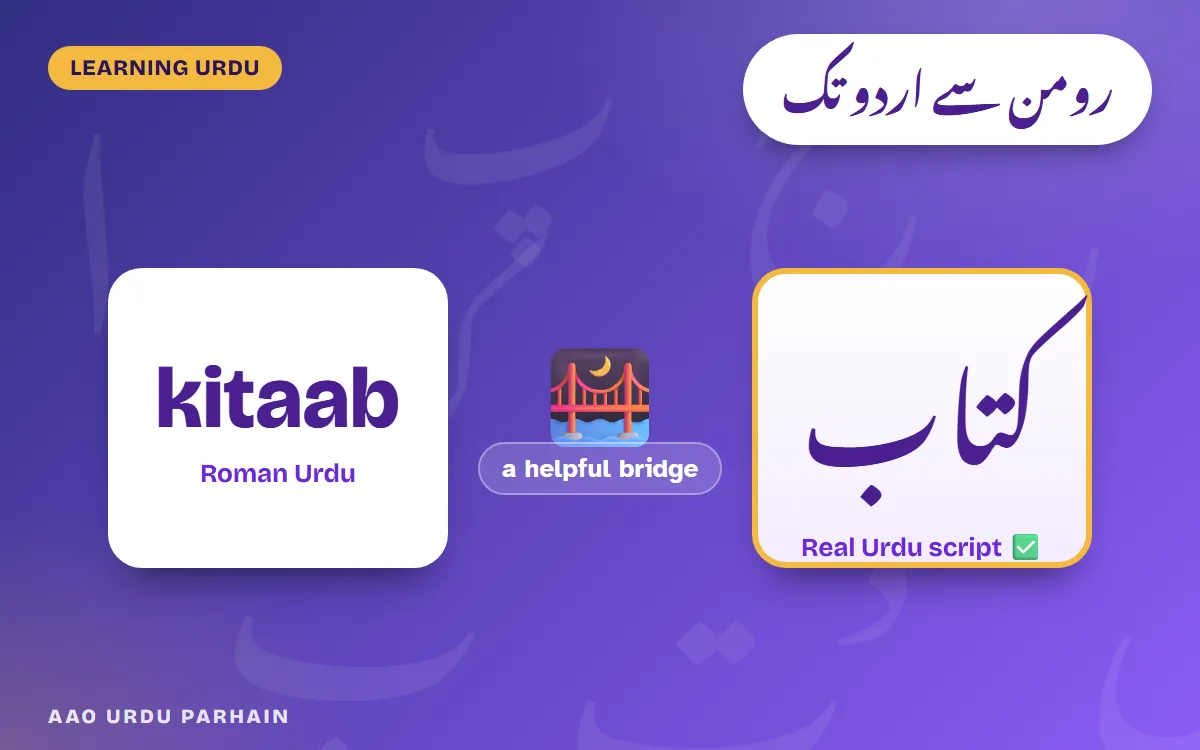
Many parents ask whether it is enough for their child to read Roman Urdu, which is Urdu written in English letters. The honest answer: it is a helpful bridge, but not a destination.
What Roman Urdu is good for
- Giving a child a first, easy way to say a word they cannot yet read.
- Helping parents who never learned the script to join in.
- Typing quickly in messages.
Where it falls short
- No standard spelling. The same word can be written kitaab, kitab or kitabb.
- Some Urdu sounds do not exist in English letters, such as the aspirated and retroflex sounds, so Roman spelling blurs them.
- It does not open the door to Urdu books, poetry, signs or handwritten letters from relatives.
A sensible path
- Use Roman Urdu next to the script on every new word, as our picture cards do.
- Move the Roman spelling to a smaller line, then remove it, as the child recognises the word.
- Keep reading short Urdu words every day, so the script becomes familiar.
The goal is that your child can read کتاب and know it says kitaab without needing the English letters at all.
If your child needs a patient, step-by-step start, you are welcome to book a trial lesson. We will listen first and then suggest where to begin.
رومن اردو یا اردو رسم الخط
رومن اردو شروع میں مددگار ہے، مگر اصل مقصد اردو رسم الخط پڑھنا ہے۔ ہر نئے لفظ کو اردو اور رومن دونوں میں دیکھیں، پھر آہستہ آہستہ رومن چھوڑ دیں۔