The Urdu alphabet has 38 letters in the version we teach. That sounds like a lot, but children do not need to learn them as 38 separate facts. The trick is to teach the shapes first and the dots second.
1. Start with sounds and pictures, not rules
Before any writing, let your child hear the letter and see a picture of a word that starts with it. Our Urdu alphabet page has a recorded sound and a picture for every letter.
2. Teach letters in families of shape
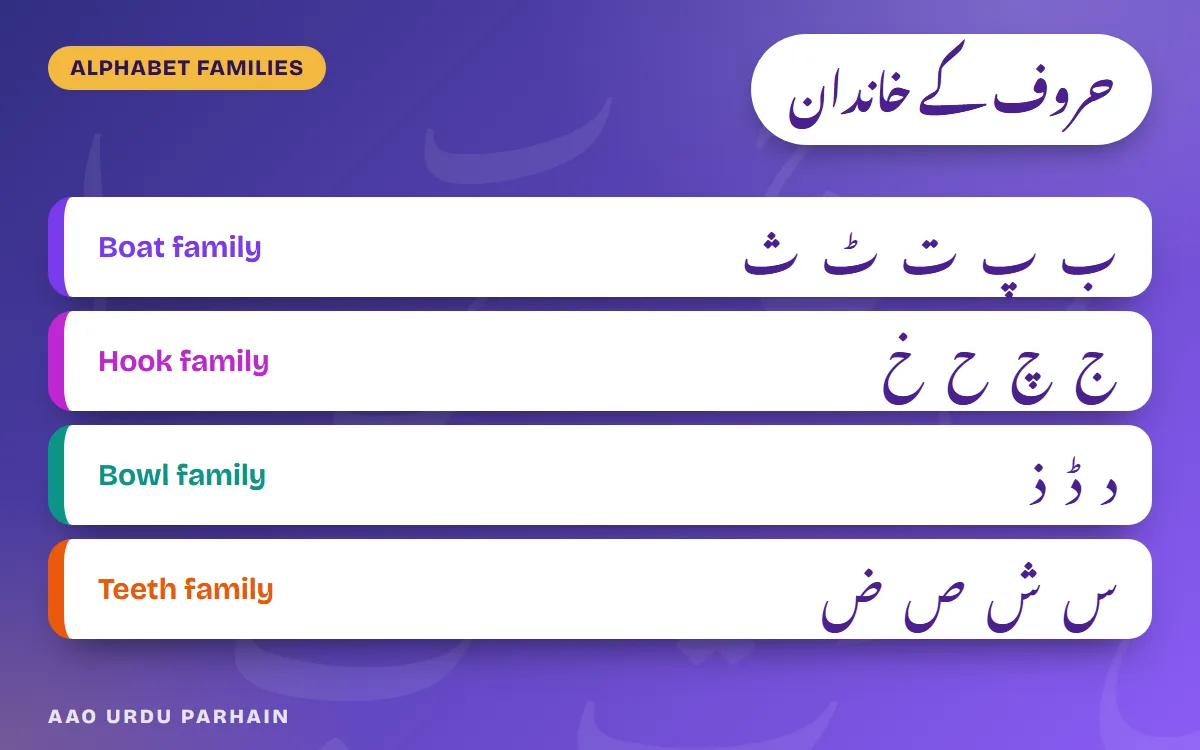
Many letters share one basic shape and differ only by their dots. Learn the shape once and you have learned several letters:
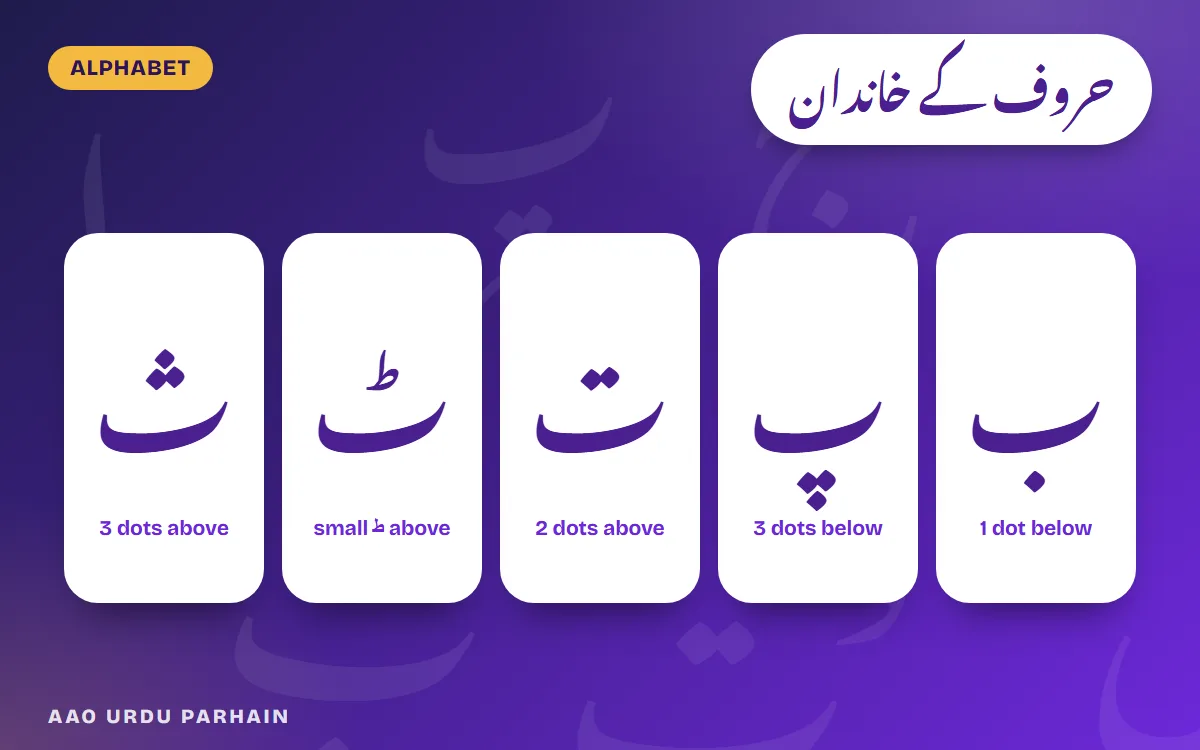
- ب bay, پ pay, ت tay, ٹ ttay, ث say: one boat shape, different dots.
- ج jeem, چ chay, ح hay, خ khay: a hook shape.
- د daal, ڈ ddaal, ذ zaal: a small bowl.
3. Add the dots as a game
Ask: one dot below, two above, three above? Dots are how children tell siblings apart, so make it a spotting game.
4. Write big before small
Trace letters in sand, flour or the air with a whole arm, right to left. Large movements help the hand remember the shape before a pencil is involved.
5. Only then, joining
Once the single letters feel familiar, show how they change shape inside a word. Read our guide on how Urdu letters join.
Ten minutes is enough
Short, cheerful daily practice beats a weekly marathon. Two or three letters at a time, revisited often.
Try it with sound: the Kids' corner has picture cards for every word here. Tap a card to hear it spoken, then play the match game.
If your child needs a patient, step-by-step start, you are welcome to book a trial lesson. We will listen first and then suggest where to begin.
بچوں کو اردو حروفِ تہجی کیسے سکھائیں
حروف کو شکل کے گروہوں میں سکھائیں، پھر نقطے۔ پہلے آواز اور تصویر، پھر لکھنا، اور سب سے آخر میں حروف کا جوڑنا۔