The step that surprises most new readers of Urdu is not learning the letters. It is discovering that letters look different once they are inside a word.
One letter, several shapes
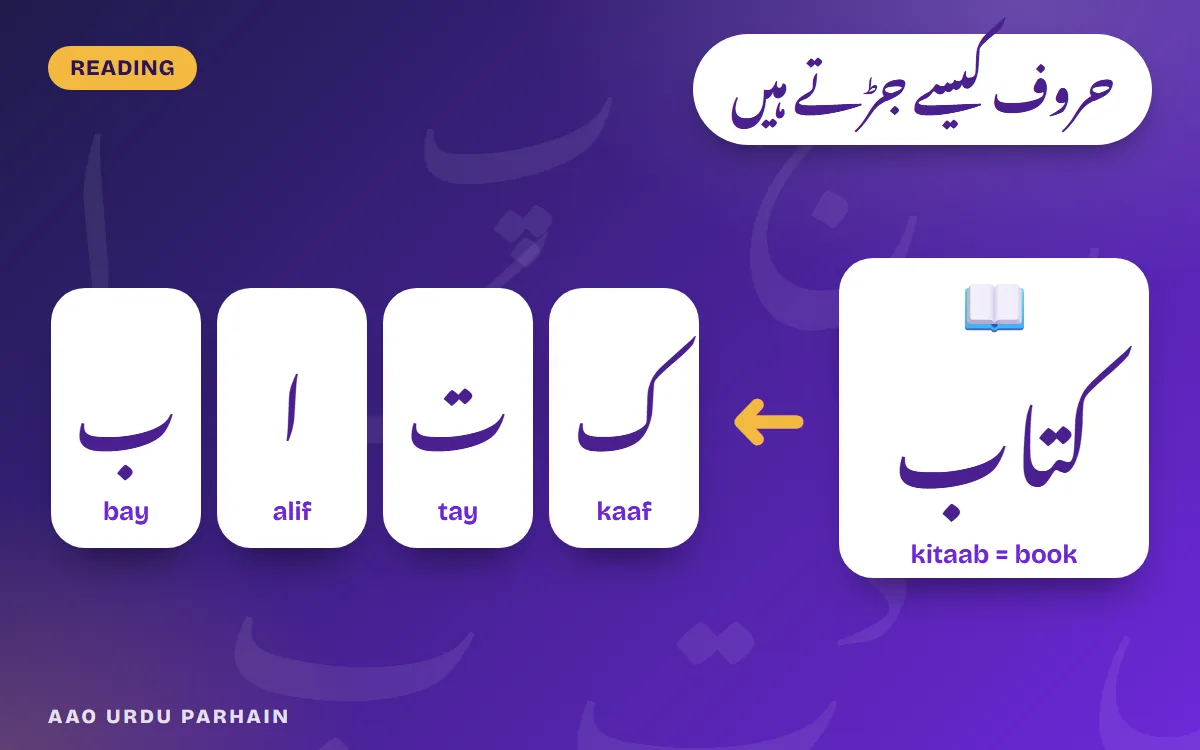
Most Urdu letters have a full form when they stand alone and shorter forms at the start, middle or end of a word. Take the word for "book". On their own, the letters are ک ت ا ب. Written as a word they become کتاب. The first two letters have lost their tails so that they can connect.
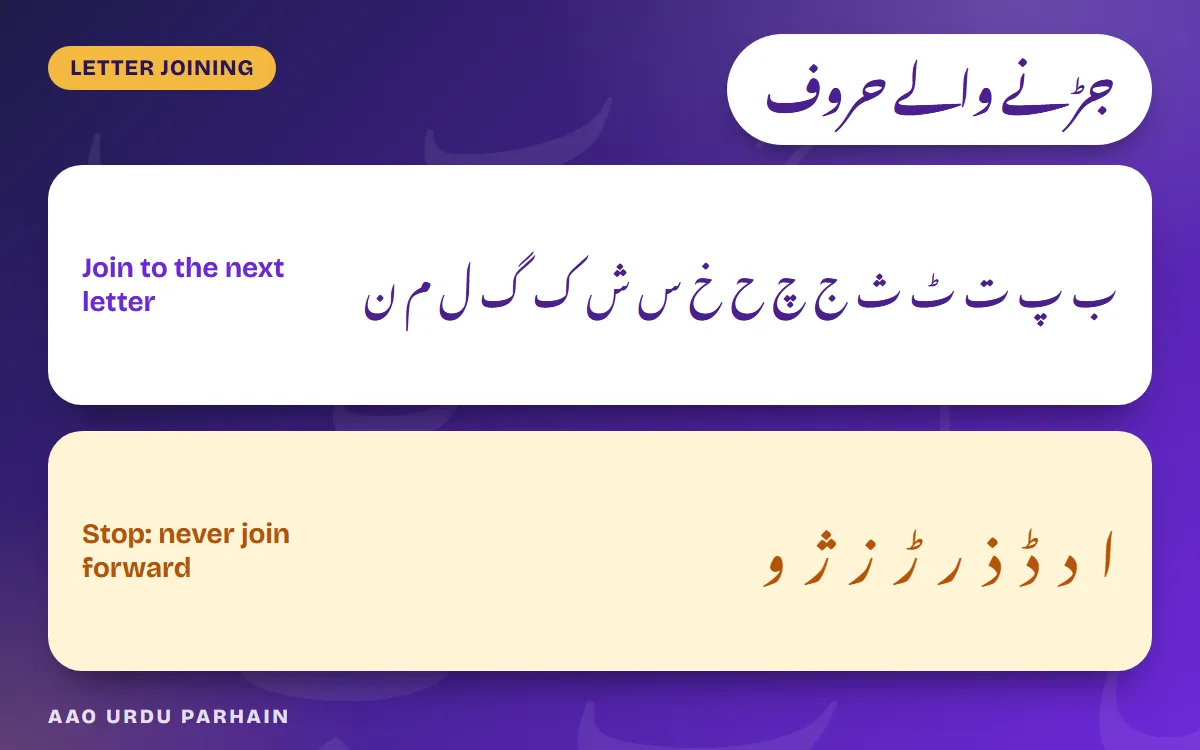
Letters that do not join forward
A small group of letters, including ا د ڈ ذ ر ڑ ز ژ and و, join to the letter before them but never to the one after. That is why the word اردو looks like four separate letters: none of them connects forward.
The dots are the key
When letters shrink, what is left is often a small tooth with dots. Children learn to read the dots: one below for ب, two above for ت, three below for پ.
How to practise at home
- Write a short word in separate letters and ask your child to write it joined.
- Do the reverse: show a joined word and ask them to name each letter.
- Look for words on food packets and signs, and count the letters together.
Urdu textbooks count between 36 and 39 letters, depending on how certain forms are treated. However they are counted, the joining rules stay the same, and once a child has seen the pattern a few dozen times it becomes automatic.
اردو کے حروف کیسے جڑتے ہیں
اردو کے زیادہ تر حروف لفظ کے شروع، درمیان اور آخر میں اپنی شکل بدل لیتے ہیں۔ مثال کے طور پر ک، ت، ا اور ب مل کر "کتاب" بنتے ہیں۔
کچھ حروف جیسے ا، د، ر اور و اپنے بعد والے حرف سے نہیں جڑتے۔ اسی لیے لفظ "اردو" میں چاروں حروف الگ الگ نظر آتے ہیں۔