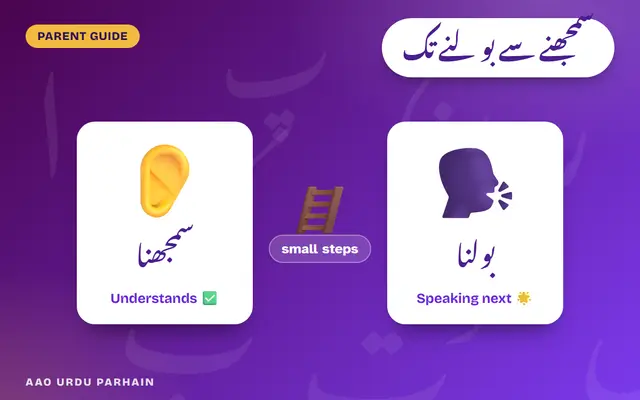
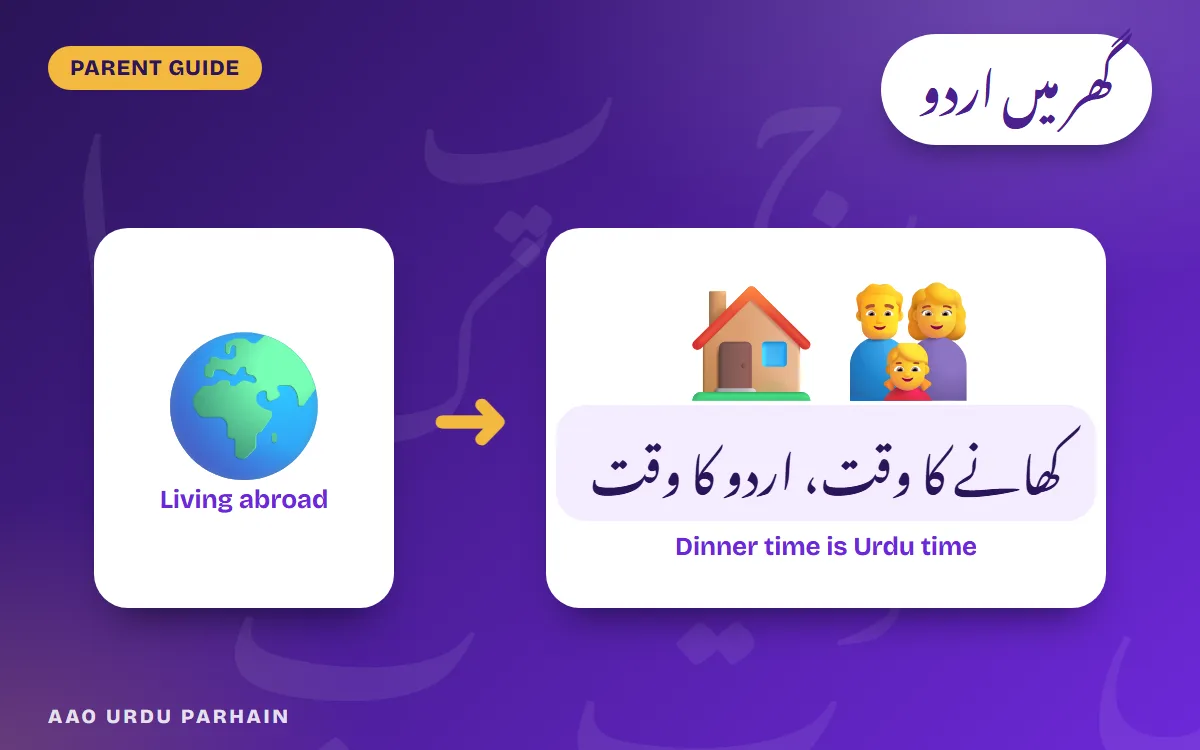
If your child understands Urdu but answers in English, you are not alone and you have not failed. It is the most common pattern in families living abroad, and it can be changed with small, steady habits.
1. Give Urdu a fixed place in the day
Choose one moment that happens daily, such as dinner or the drive to school, and make it Urdu time. A language needs a routine more than it needs enthusiasm.
2. Keep answering in Urdu
When your child speaks English, reply in Urdu calmly. Do not insist that they repeat themselves. Hearing natural Urdu directed at them, every day, is what builds their store of words.
3. Make speaking necessary
Children use a language when it gets them something. A weekly call with a grandparent who speaks little English gives Urdu a real job to do.
4. Read aloud, even a little
A page of an Urdu story at bedtime shows your child that the script means something. Let them follow the line with a finger from right to left.
5. Put Urdu on the walls
Label a few things around the house in Urdu and change the labels every two weeks. Seeing words repeatedly is how sight-reading begins.
6. Praise effort, not accuracy
Correct gently by repeating the sentence the right way, and move on. A child who is laughed at for a mistake will stop trying.
7. Get structured teaching for reading and writing
Speaking can grow at home. Reading and writing a new script usually need a teacher and a sequence. That is the part regular lessons take care of.
بیرونِ ملک رہتے ہوئے بچوں کو اردو کیسے سکھائیں
اگر آپ کا بچہ اردو سمجھتا ہے مگر جواب انگریزی میں دیتا ہے تو پریشان نہ ہوں۔ بیرونِ ملک رہنے والے اکثر گھرانوں میں ایسا ہی ہوتا ہے۔
روزانہ تھوڑا سا وقت اردو کے لیے مقرر کریں، بچے سے اردو میں بات کریں، اور سونے سے پہلے اردو کی کہانی کا ایک صفحہ پڑھ کر سنائیں۔ چھوٹی چھوٹی عادتیں بڑا فرق ڈالتی ہیں۔